

Kana Inagaki in London and Christian Davies in New York
Published Oct 1 2026
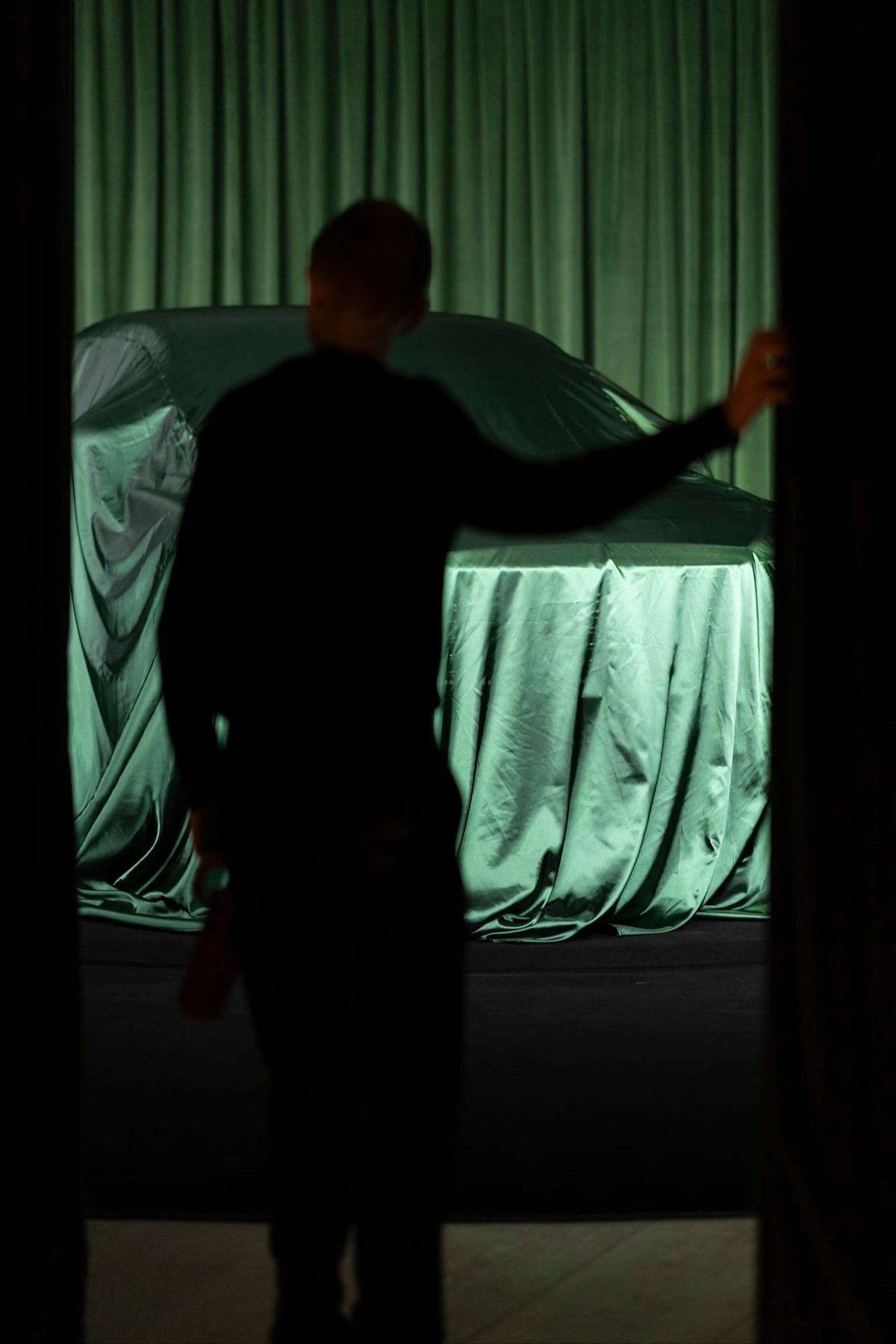
Two months after motorsport grandee Luca di Montezemolo deemed Ferrari’s new all-electric Luce model unworthy of the marque’s prancing horse emblem, the group’s chief executive had the last laugh.
“I would not change anything in the launch of the Luce,” Benedetto Vigna told reporters on an earnings call. “We are very pleased about what has been done.”
When the vehicle was unveiled in May, social media exploded with criticism of its design, the work of former Apple designer Sir Jony Ive rather than renowned automotive studios such as Pininfarina or Bertone. The group’s Milan-traded shares fell 8 per cent as di Montezemolo, a former Ferrari chair, witheringly described the Luce as “a car that at least the Chinese won’t copy”.
But by July, Ferrari had already achieved this year’s internal sales target of just under 500 units, according to people with knowledge of the matter, despite the Luce’s €550,000 base price tag. Todd Blue, a California luxury car dealer, adds that demand for the Luce has been “tremendous”, with his salespeople selling out their allocation.
Ferrari Luce
Range: Around 375 miles
Acceleration: 0-62mph in 2.5s
Top speed: 193mph
Kind: Grand tourer
Cost: From €550,000 ($620,814)
The new car did not just deviate from Ferrari’s historic design ethos. It was part of a strategy to win over completely new clients that allowed the Italian group to tap into a new generation of young and wealthy buyers, particularly in China and in technology hubs such as Silicon Valley.
“For me, this car has an important meaning for Ferrari but also for the European world and for the western world,” Vigna says of the Luce. “Why not believe that we can do it?” He has previously remarked that the surge in wealth creation due to AI is “a good opportunity for us”.
But it is not a playbook that other luxury manufacturers can easily follow, as they contend with the Trump administration’s hostile stance towards EVs and China’s slowing economy.
Many renowned marques are finding it difficult to decide whether to focus on electric or combustion engines, pushing up their costs and complicating longer-term strategic choices. It is a problem for a sector of the industry that is often at the forefront of advances in design and technology, and in which European manufacturers still enjoy almost total dominance, even as cheap Chinese-made cars flood into the mass market.
“There is a small market for luxury EVs, but it’s a very different market from your usual luxury or supercar buyer,” says Scott Sherwood, an independent analyst of luxury car brands. “And that’s where Ferrari got it right with the Luce. They targeted a completely new group of consumers.”
In Ferrari’s wake, Bentley has rolled out its first all-electric model and Jaguar will do so next week. Porsche is also going ahead with an electric version of its 718 two-seat sports car.
All are hoping that a foray into EVs could open up a new and younger client base with different tastes for design and personalisation. They, like Ferrari, intend to target the beneficiaries of the tech wealth being generated across the US.
But it is a difficult balancing act. Manufacturers need to navigate their costly transition to EVs while ensuring that combustion-engine loyalists are not left alienated and that profits from higher-margin petrol cars are not eroded.
Sherwood argues that the difficulty in replicating Ferrari’s success comes down to scale and brand strength. “Ferrari doesn’t need to sell 10,000 units to be successful. They can sell 1,000 to 1,500 and declare victory,” he says.
“The problem for Porsche is that they’d need to sell 20,000 or 30,000.”
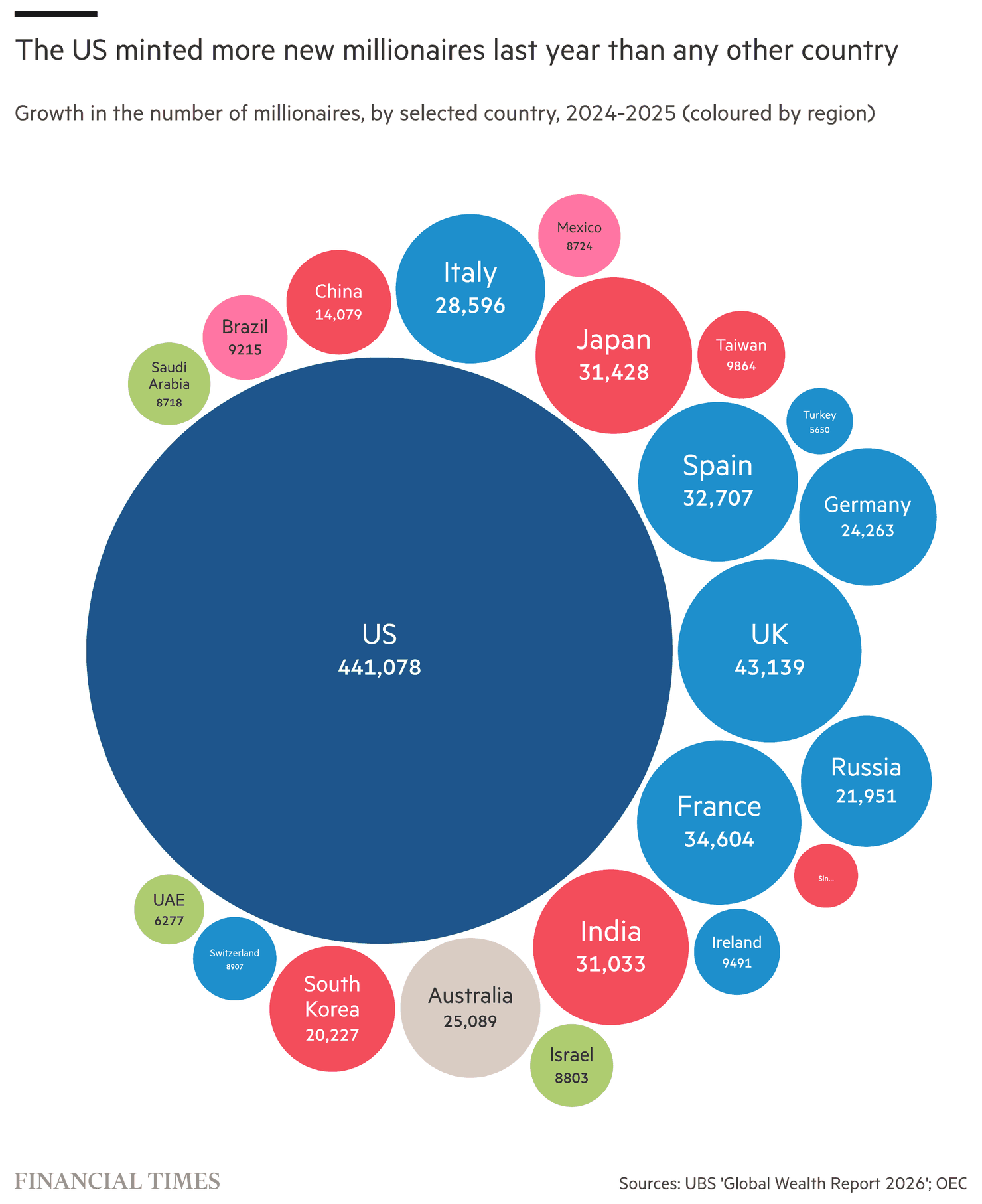
For decades, the US has been the most attractive market for luxury-car makers because of its deep pool of millionaires and the resilience of its economy.
In 2008, when most Americans had never even seen an electric car, Tesla targeted its two-seater Roadster electric sports car at a small cohort of rich tech entrepreneurs and environmentally conscious celebrities. Early owners included Google co-founder Sergey Brin and film star Leonardo DiCaprio.
That playbook is increasingly being revisited as demand in China, now the world’s largest car market, falters. Overcapacity in the country has led to a flood of exports, but ultra-high tariffs and a ban on Chinese software have kept them out of the US market.
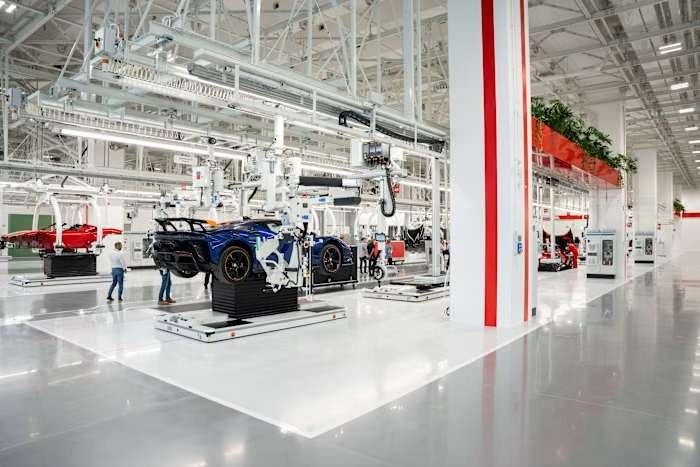
The total US market for luxury vehicles and exotic cars is likely to expand to as much as $215bn by 2035 from $110bn at present, according to recent analysis by Boston Consulting Group and duPont Registry.
Demand is expected to be weaker for higher-end luxury EVs due to the reversals in US climate policy under Trump and concerns about the resale value of battery-powered models.
Separate data from Cox Automotive shows that electric cars accounted for roughly 6 per cent of the overall new vehicle market in the US in the third quarter, down from a peak of 10.6 per cent a year earlier.
BCG and duPont Registry expect the internal combustion engine will continue to dominate sales in the “ultra-luxury” and “hyper-luxury” segments, which include vehicles priced at more than $170,000.
But Felix Stellmaszek, BCG’s managing director, says there is still a market for luxury electric cars, in part because of their exclusivity. “Everyone has his or her car collection in the garage, but if you have something that is electrified, it’s actually quite different from the rest of the buyers and collectors that you meet at the car shows.”
He adds that “range anxiety and all the factors preventing broader adoption of electric vehicles across North America in particular don’t really matter much” in the luxury sector, since high-end cars tend to be bought for personal enjoyment or scarcity value rather than daily use.
Blue, the Californian dealer, adds that what really matters to his customers is “a visceral [driving] experience in a world where we all live on these screens and on our phones”.
Range Rover Electric
Range: Around 295-410 miles
Acceleration: 0-62mph in 4.5s
Top speed: 124mph
Kind: SUV
Cost: From £154,070 ($203,705)
Jaguar Land Rover, which like Ferrari was excoriated on social media after a rebranding exercise, is targeting the US as a core market for the $130,000 Jaguar Type 01 electric vehicle due to launch in October. Range Rover’s first electric SUV appeared in September at a starting price of $140,450.
“The amount of wealth transfer that’s going to happen [in the US] over the next five to ten years is . . . by far the biggest [in the world],” says PB Balaji, the UK-based carmaker’s chief executive who has been tasked with reinventing Jaguar as an all-electric brand. “Therefore, we are giving it everything.”
Vigna has expressed confidence that the Luce will be profitable from the start, largely thanks to its high sticker price. But Ferrari is not setting high ambitions for EVs overall. It aims to make 20 per cent of its models fully electric by 2030, half of its original target, while its industry-beating operating margin of 30 per cent will be protected by continuing sales of petrol models and limited edition models such as the €3.6mn F80 supercar.
Bentley, the UK-based carmaker owned by Volkswagen, is also hoping to take advantage of vigorous US economic growth, and broaden its appeal to younger drivers, with its Torcal electric SUV.
“The strength of the US economy is unbeaten in the world,” says chief executive Frank-Steffen Walliser. “The West Coast is a very natural area and we expect that we could definitely grow there.”
But it has taken a different approach to pricing; the Torcal will start at a comparatively modest £173,300, less than half the price of the Luce. At that price point, analysts say Bentley will need to sell large numbers to generate profits, and warn that the Torcal targets the same buyers as the Bentayga, another Bentley SUV that is available in petrol or plug-in hybrid versions. The company argues there will be no cannibalisation, given the Bentayga’s slightly higher pricing.
Walliser has described the Torcal’s debut as “one of the most important product launches in our 107-year history”. It comes as Bentley’s operating profit margin in the first half fell to 4.5 per cent while vehicle deliveries declined 13 per cent to 4,211 units, partly due to its ageing product line-up and the downturn in China.
For all the recent activity in the sector, the car industry remains deeply divided on how much actual demand there is for high-end battery-powered sports cars.
Product launches so far have tended to be saloons, SUVs or so-called grand tourers — cars designed for luxurious long-distance travel. Jaguar’s Type 01 and the Rolls-Royce Spectre both belong in this category.
Beyond a few models from Lotus and Rimac, a Croatian start-up often compared to Tesla, an all-electric hypercar has proved challenging because of the adverse effect of the battery weight on performance and handling, and the perceived lack of connection between car and driver.
Porsche is busy recalibrating what some regarded as an overly bullish EV strategy. While it enjoyed initial success with the Taycan saloon and could start selling electric 718 models next year, it also plans a new combustion-engine version of its best-selling Macan SUV in 2028.
Michael Leiters, the former boss of British supercar maker McLaren who took over as Porsche chief executive in January, says he still has reservations about the readiness of EV technology for high-performance sports cars.
“There won’t be a 911 electric,” he says, referring to Porsche’s legendary rear-engined model. “The advantages of the technology depend a lot on the customer profile and the use of a car.”
Others have pivoted to hybrid cars as an interim measure, and to offset the thin margins on pure electric models. McLaren is developing its first hybrid SUV, even though it merged with EV start-up Forseven Holding last year.
Michael Straughan, McLaren’s chief operating officer, says the luxury sector’s transition to electric propulsion is “inevitable” over the long term but cautions that for now, its customers were not “crying out for EVs”.
“The trick is timing it so that the product development start matches the time when EVs are accepted,” says Straughan, who was previously the chief operating officer at Aston Martin. “For a small maker, if you select the wrong technology, it has a dramatic effect on the business.”
Italian rival Lamborghini, another Volkswagen brand, has abandoned plans to launch its first fully electric car by 2030 and will instead roll out two plug-in hybrid models, while Lotus, the Chinese-owned marque known for lightweight and agile sports cars, has also pivoted from an EV-focused strategy to one more focused on hybrids.
“We have very good technology and architecture for both battery EVs and plug-in hybrids. So we are going to do both,” says chief financial officer Wang Daxue. He adds that the US will be “a very important market” for its upcoming Type 135 hybrid supercar, though the vehicle’s Chinese technology content means Lotus will need regulatory approval to sell it in America.
Consumers are warming to EVs at different speeds in different markets, say industry executives. The rise in fuel prices amid war in the Middle East has sparked a surge in sales in Europe, contrasting with the EV slump in the US.
“There was a pendulum that was going back to the internal combustion engine and now it’s coming back because of high petrol prices and subsidies by governments [in Europe],” says Leiters.
“You have to be very careful . . . so we have all the tools we need to react to the markets.”
In addition to correctly predicting the pace of the electric transition, luxury car brands need to ensure that they do not leave their existing clients behind in the pursuit of new technology and design.
“We as a company have the responsibility to move forward the flag of innovation [while] respecting the values of the past,” says Ferrari’s Vigna.
Two months after unveiling the Luce, the company launched the 12Cilindri Manuale. With its massive V12 petrol engine and a transmission system that mimics the feel of a mechanical gearbox, the limited edition model is red meat for traditionalists. “A manual transmission is the ultimate emblem of the ability to reconnect to actually living,” says Blue, the car dealer.
Even the Luce’s design nods to tradition. Its interior features physical dials and buttons, in addition to a modern touchscreen panel. A vibrating sound from its motors and components inspired by an electric guitar compensate for the lack of traditional engine roar.
For the Torcal, Bentley’s engineers tried to create an emotional connection with a propulsion sound handcrafted by musicians and featuring a blend of percussion, crystal glass, birds and the tapping of leather.
“The consumer choice is very different in the acceptance of electric cars,” says Walliser, the Bentley chief executive, adding that this is why he and others will keep offering petrol and hybrid models as well as EVs.
Ed Kim, chief analyst at AutoPacific, an automotive market research group, does not expect combustion engines to leave the ultra-luxury segment in the foreseeable future.
“We should remember that there are still plenty of those traditionally minded old-money buyers left,” he says. “My hunch is that the ultra-luxury segments will be one of the last to let go of combustion.”
But while western carmakers deliberate over the pace of the electric transition and continue to develop models for petrol devotees, Chinese EV makers such as BYD, whose mass-market models are already making inroads in key European markets, are now setting their sights on the premium segment.
At the Goodwood Festival of Speed in July, BYD unveiled its new Denza Z electric supercar, which is capable of more than 320km/h and will have a starting price of £142,900 in the UK.
Asked why BYD was entering the premium segment, its top international executive Stella Li says: “It is natural, since we have the technology. Why not?
“Then, we need to make it super successful.”
Copyright The Financial Times Limited 2026. All rights reserved.